
5 Mistakes to Avoid With AC Repair & Installation
The costliest AC mistakes aren’t made during the repair itself. They’re made in the 48 hours before and after, in the contractor selection process, and in the decisions homeowners make trying to save $200 that end up costing $2,000. After nearly two decades of cleaning up these exact situations across San Jose, we’ve identified five patterns that keep showing up.
If you’d rather not navigate this alone, Crestview Heating & Air California offers free estimates. Call (844) 560-6978.
Mistake #1: Hiring on Price Alone for Installation
In 18 years of HVAC work, the call Marcus dreads most isn’t a breakdown. It’s the homeowner who says “another company was just here last month” and now needs the same repair plus two new problems the first tech created.
A $400 cheaper installation bid almost always hides corners. The two we see most in San Jose homes: improper line set sizing and refrigerant charge errors. An undersized line set creates oil return problems that burn out compressors within 18 months. An incorrect refrigerant charge, either over or under, strains the system until something major fails. The $400 savings becomes $1,200 in callbacks, then a full replacement.
What to verify before signing:
- They perform a Manual J load calculation for your specific home, not a square-footage guess
- They’ll handle permit pulling and inspections (see Mistake #2)
- The bid specifies line set diameter and refrigerant type, not just “new system installed”
- They explain why they selected the specific tonnage, not just matched your old unit
We’ve rescued installations in Willow Glen and Almaden Valley where the original contractor disappeared after cashing the check. The homeowner paid twice. Your system, our specialty means we work on what you have, but we’d rather you not need us for someone else’s mistake.
Mistake #2: Skipping the Permit on New Installation
San Jose requires permits for AC replacement and new installation. The permit process adds cost and a city inspection, which is exactly why some contractors suggest skipping it. They frame it as saving you money and hassle.
Here’s when that surfaces. During a home sale, the buyer’s inspector flags unpermitted HVAC work. The city requires retroactive permitting, which means opening walls, proving code compliance, and sometimes redoing work that doesn’t meet current standards. We’ve seen $8,000 installations become $14,000 headaches because the seller has 30 days to close and now needs everything expedited.
Insurance claims are the other landmine. If an unpermitted system contributes to water damage or electrical fire, your carrier has grounds to deny. The permit isn’t bureaucracy. It’s a documented third-party verification that your system meets safety and efficiency standards.
At Crestview, we pull permits on every installation. The inspection schedule adds a few days, but our 250+ customers who left reviews agree: the paperwork protection is worth it.
Mistake #3: Running With a Known Refrigerant Leak
“It’s still cooling, we’ll deal with it next season.” We hear this every June in San Jose, right before the real heat hits. By August, that homeowner is buying a new compressor.
Here’s the mechanical reality. Refrigerant doesn’t just carry heat; it carries lubricating oil back to the compressor. A low charge means oil pools in the evaporator instead of circulating. The compressor runs dry, overheats, and seizes. A $300 leak repair and proper recharge becomes a $1,800 compressor replacement, often with additional refrigerant system contamination that requires flushing or component replacement.
The leak also lets moisture into the system. Moisture creates acid that eats copper from the inside. We’ve opened systems in Cambrian Park where the copper tubing looked fine externally but was paper-thin internally. No warning, just sudden failure.
If your system needs refrigerant added more than once, you have a leak. Period. The “top-off and wait” approach converts repairable equipment into replacement jobs.
Mistake #4: Trusting a Diagnosis Without Gauges
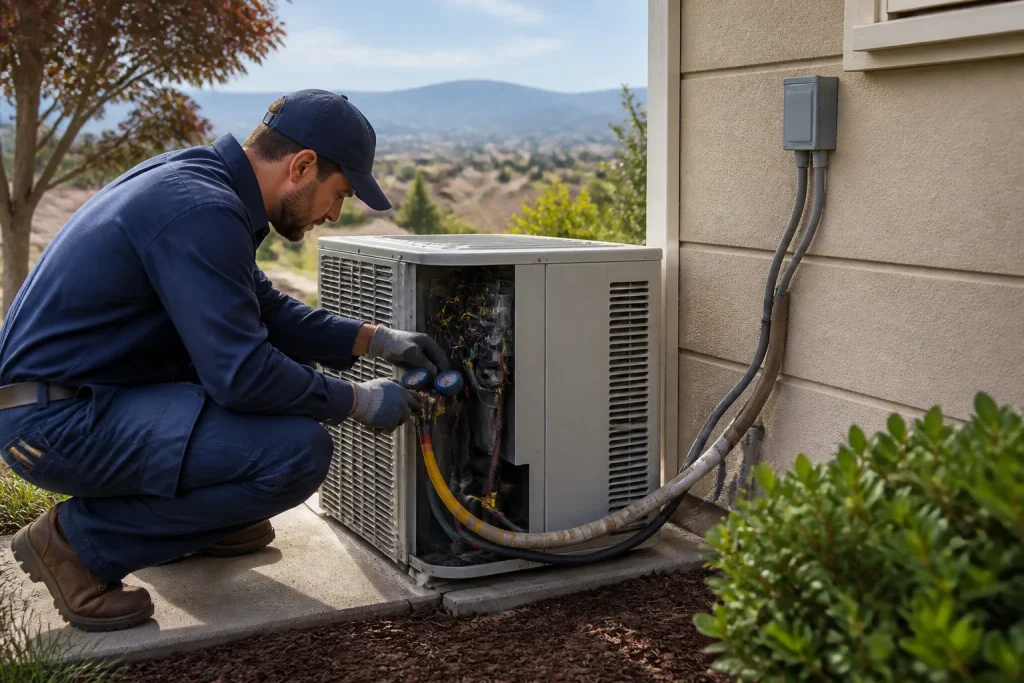
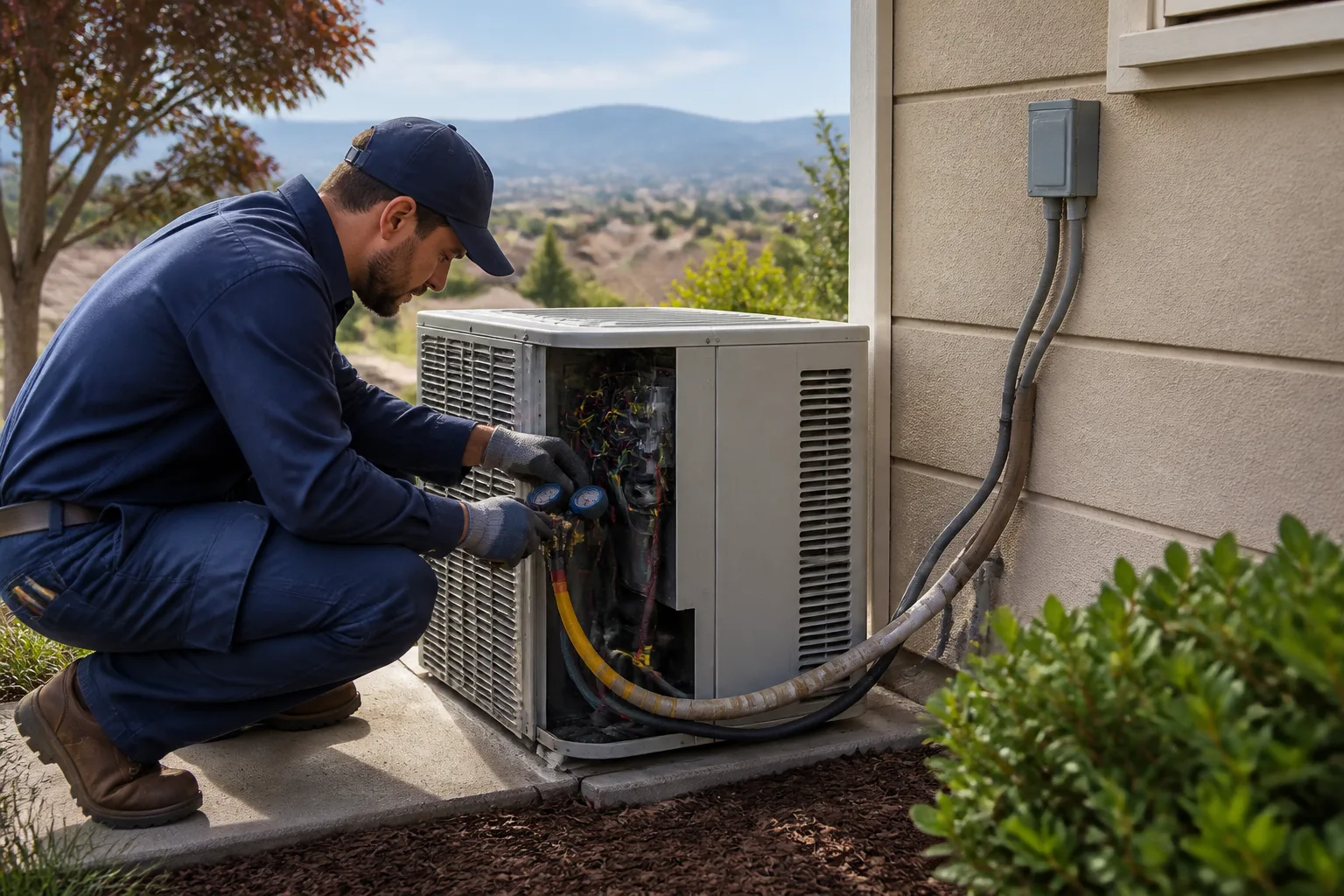
A proper AC diagnostic takes 20–30 minutes minimum and involves manifold gauges, temperature probes, and amp draw measurement. Any technician who walks in, glances at the unit, and quotes a repair without touching a gauge is guessing.
Questions to ask before authorizing any repair:
- What are my suction and discharge pressures?
- What’s the superheat and subcooling reading?
- What’s the temperature split across the evaporator coil?
- What amp draw are you seeing on the compressor and fan motor?
These aren’t trick questions. They’re basic diagnostic data that separates a $150 capacitor replacement from a misdiagnosed $900 compressor job. We’ve fixed systems in Rose Garden where the previous company sold a “failing compressor” that just needed a hard start kit and proper charge. The homeowner nearly paid for equipment they didn’t need.
Owner-managed, not outsourced means Marcus still carries gauges on every job. The diagnostic isn’t delegated to a checklist.
Mistake #5: DIY Filter Changes That Damage Drain Lines
Changing your own filter is smart maintenance. Doing it without checking what’s around the filter slot is where we find water damage inside walls.
The condensate drain line on many San Jose homes runs from the indoor coil, through the furnace cabinet, and out through the wall or to a floor drain. The connection points are plastic barbed fittings, often with flexible tubing. When homeowners pull the filter, they bump the drain line. The fitting cracks slightly, or the hose slips off. Not enough to flood immediately. Just enough to drip slowly inside the wall cavity for six weeks.
By the time you see the drywall stain, you’ve got mold risk, insulation damage, and sometimes subfloor rot. We pulled one out of a garage over in Evergreen last month where the homeowner’s routine filter change had loosened the drain connection six months prior. The wall behind the unit was soft halfway to the floor.
After any filter change, shine a flashlight on the drain line fittings. Look for moisture, white mineral buildup, or a hose that doesn’t seat firmly. If your filter slot is tight against the drain components, consider having a tech show you the safe path during your next maintenance visit.
When to call a pro: If you spot moisture, if the system makes new noises after filter service, or if you’re unsure which components are safe to touch. From emergency calls to commercial buildouts, we’re equipped to assess what you’ve got.
Related services in San Jose: For installation done with permits and proper load calculation, see our AC Repair & Installation in San Marcos page. For heating system concerns, visit our Heating & Furnace in San Marcos page. For heat pump and ductless options, our Heat Pump & Mini Split in San Marcos page covers what works in our climate.
The Bottom Line
Most expensive AC problems are preventable decisions, not random failures. The cheapest bid, the skipped permit, the “wait and see” leak, the gaugeless diagnosis, the careless filter change — these five patterns account for the majority of our major repair calls in San Jose.
Key takeaways:
- Installation bids should specify equipment, line set sizing, and refrigerant details, not just a bottom dollar
- Permits protect your saleability and insurance coverage; any contractor suggesting otherwise is cutting their own costs, not yours
- Refrigerant leaks never fix themselves; delayed repair destroys compressors
- Diagnostic data should be shared before any repair authorization
- DIY maintenance is valuable, but know what’s connected near your filter slot
Nearly two decades of HVAC experience means we’ve seen these mistakes repeat across every San Jose neighborhood from Downtown to Silver Creek. The homeowners who avoid them save thousands and get years more from their equipment.
If you’re in San Jose and need help assessing your system, Crestview Heating & Air California offers free estimates. Call (844) 560-6978.
Frequently Asked Questions
Most residential AC repairs in San Jose range from $150 for minor electrical fixes to $900 for compressor-related work. Refrigerant leak repairs typically fall between $300 and $600 depending on location and accessibility. The exact cost depends on diagnostic findings, which is why we provide upfront pricing after inspection. Call (844) 560-6978 for a free estimate.
Replacement becomes the better financial choice when repair costs exceed 40% of a new system’s price and your equipment is over 12 years old. For a standard 3-ton system in San Jose, that threshold usually sits around $3,000 in repair costs. We evaluate remaining equipment life, efficiency gains, and your specific comfort complaints before recommending either path. Call (844) 560-6978 and we’ll walk through the numbers for your situation.
We offer emergency HVAC service for breakdowns during San Jose’s peak cooling season. Same-day availability depends on call volume and parts required. Capacitor, contactor, and standard electrical repairs are typically completed in one visit. Compressor or coil replacements requiring parts orders may take 24–48 hours. Call (844) 560-6978 to check current availability.
Verify three things: the permit was pulled and passed inspection, the system runs 15–20 minutes per cycle without short-cycling, and your first utility bill reflects expected efficiency gains. A proper installation in San Jose’s climate should maintain 75°F indoor temperature even when outdoor temperatures hit 95°F. If your system struggles in normal summer conditions, the installation likely has sizing or charge issues. We perform post-installation assessments on systems we didn’t install — call (844) 560-6978 to schedule.
Written by Marcus Feldman, Owner & Service Manager at Crestview Heating & Air California, serving San Jose since 2007.
Need HVAC Help?
Call Crestview Heating & Air California — licensed & insured, here with fast after-hours help in California.
(844) 560-6978